
At the Back of the North Wind
A boy travels with the North Wind in a fantasy classic.

Internet Archive Book Images · No restrictions
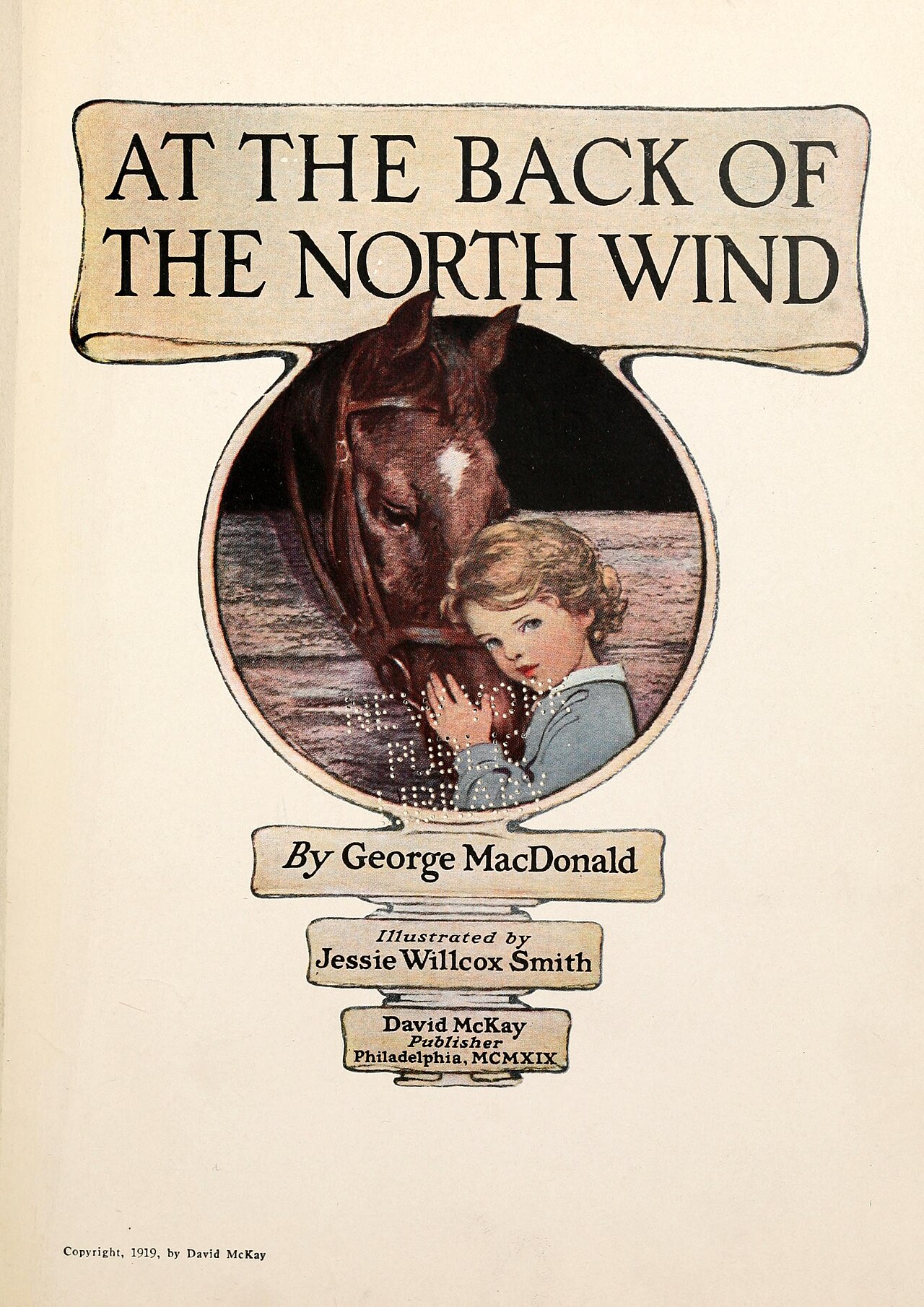
At the Back of the North Wind is a children's fantasy by Scottish writer George MacDonald. It first appeared as a serial in the children's magazine *Good Words for the Young* starting in 1869, and was released as a complete book in 1870 (though the title page is dated 1871). The story follows a boy named Diamond, whose nighttime travels with the enigmatic Lady North Wind form the core of the plot. The book also contains the fairy tale *Little Daylight*, which has sometimes been published on its own or included in other collections of MacDonald's stories.
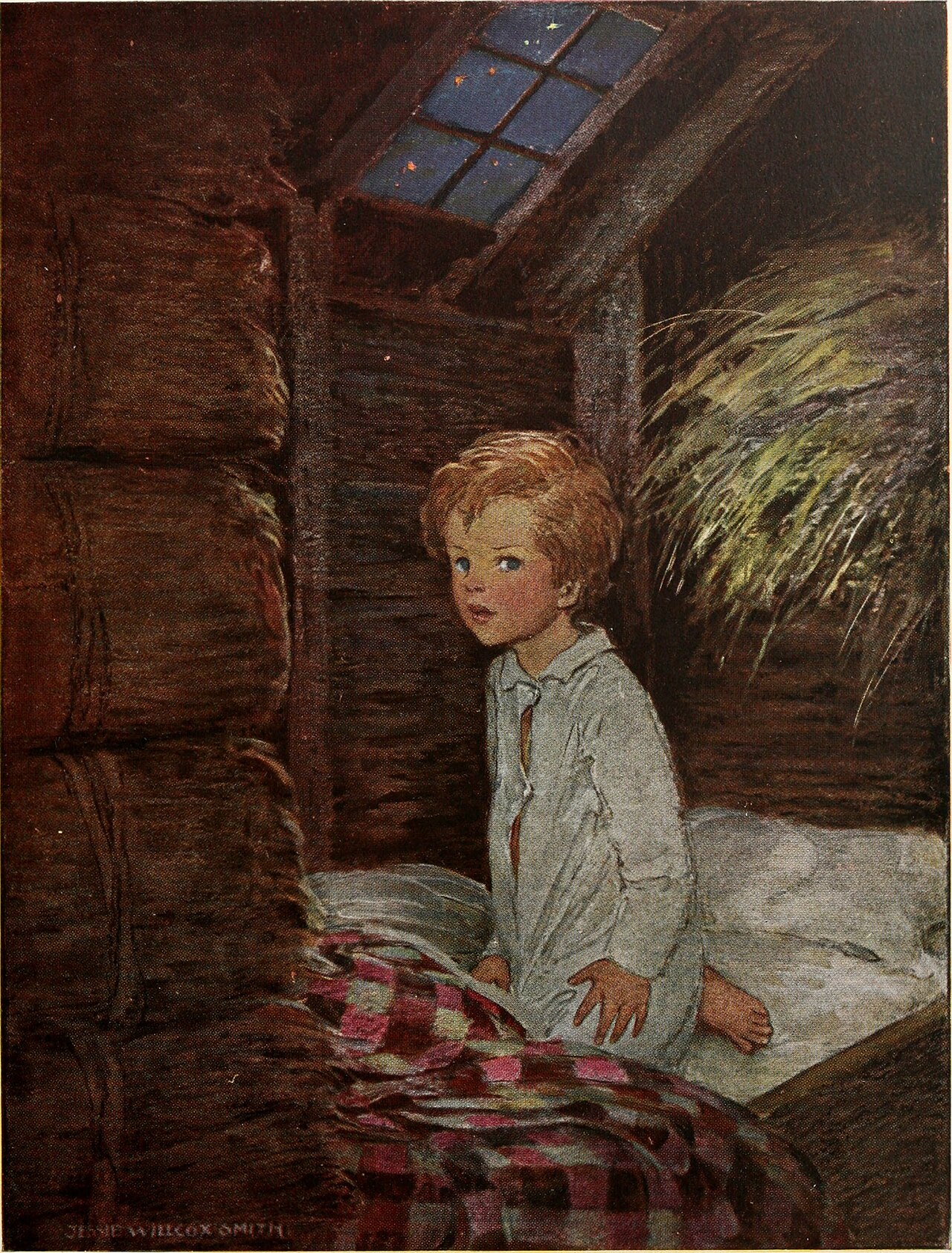
The narrative centers on Diamond, a gentle boy who brings happiness wherever he goes, fighting off gloom and bringing calm to his household. One night, while trying to sleep, he repeatedly plugs a hole in the wall of his attic bedroom to block the wind. He discovers this action is blocking the view of a goddess-like being, North Wind. Diamond befriends her, and she allows him to fly with her on various adventures, through which he comes to understand her true nature.
The book explores deep theological and philosophical questions, particularly the problem of evil. It is now regarded as one of MacDonald's finest works. According to his son and biographer Greville MacDonald, the character Diamond shares many traits with MacDonald's own son Maurice, who died young. Diamond is often seen as a Christ-like figure, always helping others while remaining somewhat detached from the world.
An abridged version, "Simplified for Children" by Elizabeth Lewis, was published by Lippincott in 1915. This edition reduced the original text from roughly 89,339 words to 27,605 words and featured illustrations by Maria L. Kirk. In 2005, the conservative Christian series *Focus on the Family Radio Theatre* produced an audio drama adaptation, with Juliet Stevenson voicing the North Wind and Pax Baldwin playing Diamond.
- first_serialized
- 1869
- published_in_book_form
- 1870 (dated 1871)
- abridged_edition
- 1915 version simplified by Elizabeth Lewis
Lore & Background
The book tells the story of a young boy named Diamond, who brings joy and peace to his family. One night, he repeatedly plugs a hole in his loft wall to stop the wind, but discovers this blocks a goddess-like being, North Wind, from seeing through her window. Diamond befriends her, and she lets him fly with her on several adventures until he understands her true nature.
Reader's Guide
At the Back of the North Wind is considered one of George MacDonald's masterpieces, touching on theological and philosophical questions, especially concerning theodicy. According to MacDonald's son and biographer Greville MacDonald, there are many similarities between Diamond and MacDonald's own son Maurice, who died young. Diamond seems to represent Christ, always trying to help others while not completely belonging to this world. The book has been adapted for radio, including a 2005 audio drama by Focus on the Family Radio Theatre starring Juliet Stevenson and Pax Baldwin. An abridged edition simplified for children by Elizabeth Lewis was published in 1914, reducing the original length from approximately 89,339 words to 27,605 words, with illustrations by Maria L. Kirk.
Did You Know?
- The book was serialized in the children's magazine Good Words for the Young beginning in 1869.
- It includes the fairy tale Little Daylight, which has been published separately.
- A 1915 abridged version simplified for children by Elizabeth Lewis shortened the text from about 89,339 words to 27,605 words.
- A 2005 audio drama adaptation was produced by Focus on the Family Radio Theatre.
Origins and Publication History
George MacDonald, a Scottish writer of the nineteenth century, first brought his fantasy tale to readers through serialization in Good Words for the Young, a children's magazine, beginning in 1868. The story, centered on a young boy named Diamond and his extraordinary nighttime companionship with the personified North Wind, ran over several installments before MacDonald saw it collected into a single volume in 1871. The book form gave the narrative a permanence that the magazine format could not, allowing it to circulate as a complete work of children's fantasy. One notable structural feature is the inclusion of the fairy tale "Little Daylight," which MacDonald embedded within the larger story. Over the decades, that tale gained a life of its own, being extracted as a standalone piece and appended to various anthologies of MacDonald's fairy tales. The gap between the 1868 serialization and the 1871 book publication suggests a period of revision and shaping that helped the story find its final form as a cohesive fantasy adventure.
Plot and Narrative Structure
The narrative follows Diamond, a young boy whose defining trait is an almost supernatural capacity for joy. He actively combats despair and gloom in his household, bringing a sense of peace to his family. The inciting incident arrives on an ordinary night: as Diamond attempts to fall asleep in his loft bedroom, he notices a draft and repeatedly stuffs a hole in the wall to keep the wind out. What he does not realize is that the hole serves as a window for a goddess-like figure, the North Wind, who has been peering into the world through it. By blocking her view, Diamond inadvertently draws her attention to him. The two form a friendship, and she grants him the extraordinary privilege of flying alongside her through the night sky. Together they embark on a series of adventures that gradually reveal her true nature to the boy. The story's architecture moves from domestic warmth to cosmic wonder, with Diamond's growing understanding of the North Wind serving as the emotional and spiritual throughline that binds the episodic journeys together.
Theological Depth and Personal Resonance
Beneath its surface as a children's fantasy, MacDonald's work engages with profound theological and philosophical questions, particularly the problem of theodicy—why suffering exists in a world governed by a benevolent force. Today the book is widely regarded as one of MacDonald's masterpieces, a testament to the depth he wove into what might otherwise seem a simple adventure. The personal stakes behind the writing are equally significant. Greville MacDonald, the author's son and biographer, identified strong parallels between Diamond and his own brother Maurice, who died in childhood. This biographical layer adds a poignant undercurrent to the narrative. Furthermore, Diamond carries clear Christ-like qualities: he is perpetually oriented toward helping others, radiating kindness, yet he never seems to fully belong to the earthly world around him. This tension between service and otherworldliness gives the character a spiritual dimension that elevates the story beyond conventional children's literature and invites readers of all ages to contemplate questions of purpose, suffering, and grace.
Legacy, Adaptations, and Continued Reach
More than a century after its initial publication, the work continues to find new audiences through diverse adaptations. In 1914, Lippincott released an abridged edition titled "Simplified for Children," prepared by Elizabeth Lewis and illustrated by Maria L. Kirk, which trimmed the original approximately 89,339 words down to 27,605. The story has also crossed into performance and audio media: a stage musical has been produced, and in 2005 the conservative Christian radio series Focus on the Family Radio Theatre staged an audio drama featuring Juliet Stevenson as the North Wind and Pax Baldwin as Diamond. More recently, Goblin Market Theatre Company Ltd. released an unabridged audiobook in 2020. Because the text is in the public domain, it remains freely accessible through platforms such as Project Gutenberg, Standard Ebooks, and LibriVox, ensuring that new generations of readers and listeners can encounter MacDonald's vision without barrier.
Gallery
Frequently Asked Questions
Who wrote At the Back of the North Wind and when was it first published?
Scottish author George MacDonald wrote the work, which ran as a serial in the children's periodical Good Words for the Young from 1869 before appearing as a standalone book in 1870 (the title page reads 1871).
Who is Diamond in At the Back of the North Wind?
Diamond is the young boy who serves as the story's protagonist; his nighttime companionship with the Lady North Wind and his travels to the far reaches of the world form the backbone of the plot.
What is the Lady North Wind's role in the novel?
She is the enigmatic, powerful figure who lifts Diamond into the air each night and guides him on his journeys, ultimately leading him toward the place 'at the back of the North Wind' where the tale's central themes of loss and transcendence are resolved.
How does At the Back of the North Wind end?
Diamond's final voyage carries him to the back of the North Wind, a realm of ultimate stillness and peace, after which he returns home as a changed boy who has glimpsed something beyond the ordinary world.
What is Little Daylight and how does it relate to the main story?
Little Daylight is a standalone fairy tale embedded within the book that follows a child born into perpetual darkness who is eventually carried into the light; it has at times been printed separately or included in other anthologies of MacDonald's stories.
More in British fantasy novels 1-24
Spotted an error? Know more?
This is a living reference — every entry is fact-audited, and reader corrections feed straight into our audit queue. Suggest an edit · See this site's audit record